Unlocking User Experience: Centralized Auth as the Key to Seamless Social Login & Analytics
TL;DR
- Centralized authentication isn't just about security; it's crucial for a smooth user experience, especially when integrating social logins and leveraging login analytics. This article explores how developers can use centralized auth to streamline the user journey, improve security, and gain valuable insights into user behavior, all while reducing development overhead with tools like LoginHub.
The UX Bottleneck: Why Decentralized Auth Fails Users
Ever tried juggling flaming torches while riding a unicycle? That's kinda what decentralized authentication feels like for users.
Decentralized authentication, in this context, means each platform or service you use has its own separate login system. You know, like having a different key for every single door in your house.
Think about it: you're bouncing between different platforms, each with its own login requirements. It's a mess and honestly, who has the time?
- Inconsistent user experience across platforms happens more often than we'd like to admit. You got one site asking for an email, another wanting a phone number, and a third demanding your social security number (okay, maybe not that last one, but you get the point). This inconsistency isn't just annoying-- it's bad ux.
- Increased friction during signup and login is a huge conversion killer. The more hoops a user has to jump through, the more likely they are to just give up and go somewhere else. Especially if they’re on mobile, trying to remember yet another password.
- Higher support costs due to login issues are a silent drain on resources. Password resets, account recovery... it all adds up. And let's be real, most of those support tickets are probably from people who just forgot which email they used to sign up.
- Security vulnerabilities from managing multiple authentication methods is something that keeps ceos up at night. Every new login system is another potential attack vector. The more spread out your authentication is, the harder it is to keep everything secure. This is because each system might have different security policies, outdated integrations, or even developer errors in how they implement different protocols, creating weak points.
It's not just about convenience, it's about losing customers.
The direct user experience issues like inconsistency and friction directly lead to negative business outcomes. When users face these hurdles, the consequences ripple outwards.
- Slow loading times due to multiple auth calls is a performance nightmare. Every time a user interacts with a different part of your app, it has to re-authenticate. All those extra calls adds latency, and that means frustrated users who are staring at a spinning wheel.
- Abandoned carts and signups are the direct result of that frustration. People are impatient, and if your site is slow or confusing, they'll bounce. A 2023 study by Baymard Institute found that almost 70% of online shopping carts are abandoned - highlighting just how sensitive users are to friction in the checkout process.
- Negative reviews and word-of-mouth can spread like wildfire. One bad experience can turn into a social media rant that reaches thousands of people. Nobody wants that, and it’s hard to recover from that kind of pr hit.
- Decreased user engagement and retention can be a slow, painful death for your business. If people don't enjoy using your app, they're not going to stick around. It's as simple as that.
Social login should be easy, but often isn't. This is a specific facet of the broader decentralized auth problem.
- Inconsistent social login options across different parts of an app gives off a disorganized vibe. Maybe you can login with Google on the homepage, but only Facebook on the checkout page. It's disjointed and confusing.
- Difficulty in managing multiple social provider apis is a headache for developers. Each platform (Facebook, Google, Twitter, etc.) has its own quirks and requirements. Keeping everything up-to-date and working smoothly is a constant battle.
- Increased complexity in handling user data from various sources is a privacy nightmare waiting to happen. Each social provider gives you different information, in different formats. Trying to normalize all that data and stay compliant with privacy regulations is a recipe for disaster.
- Security risks associated with implementing social login incorrectly are serious. If you don't handle tokens and permissions properly, you could be exposing user data or allowing unauthorized access.
So, what’s the alternative? Centralized authentication, which we'll get into next, offers a way to streamline this mess and create a much smoother experience for everyone.
Centralized Authentication: Your UX Superpower
Okay, so you're telling me I can ditch the password madness? Sounds like a dream, right? Centralized authentication might just be the superhero your user experience needs.
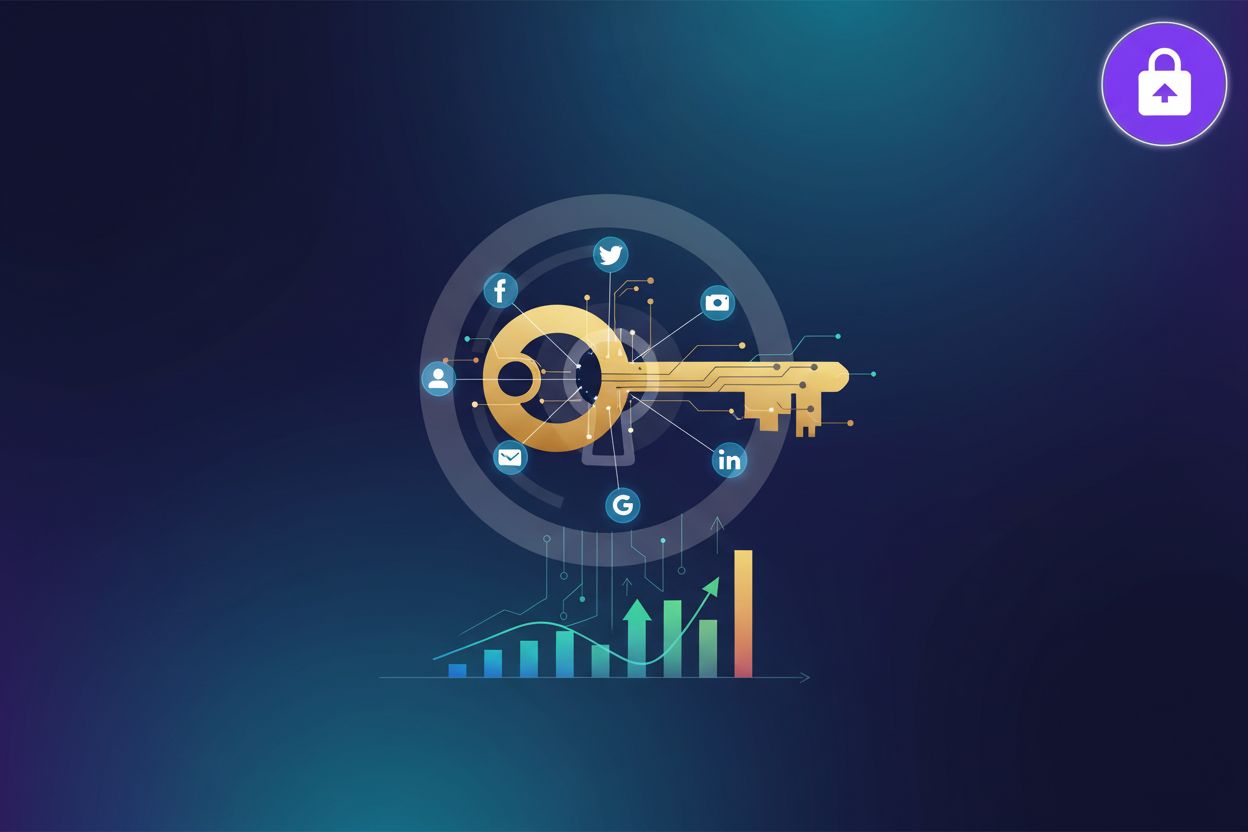
Think about it: a single point of entry for all your applications. No more remembering a million different passwords or dealing with endless "forgot password" requests. It's all about streamlining the process and making life easier for everyone involved.
- Consistent user experience across all applications is a game-changer. Imagine a healthcare provider with multiple patient portals. With centralized authentication, patients can use the same login credentials to access their medical records, schedule appointments, and pay bills. This creates a seamless and intuitive experience, which, let's be honest, is pretty rare in healthcare these days.
- Simplified signup and login processes translate to happier users and higher conversion rates. In the e-commerce world, this means fewer abandoned carts and more completed purchases. Instead of forcing users to create a new account every time they want to buy something, they can use their existing credentials to log in quickly and easily.
- Reduced development and maintenance costs are a huge win for businesses. Instead of building and maintaining separate authentication systems for each application, you only have to manage one. This means less code to write and maintain for each application, fewer security audits required for individual systems, and a streamlined process for applying security patches and updates. This frees up valuable time and resources that can be used to focus on other priorities—like actually improving your product.
- Improved security through centralized control is probably the most important benefit of all. By managing authentication in one place, you can implement stronger security measures and better protect user data. This includes things like multi-factor authentication, password policies, and real-time threat detection.

Social login should be easy. Centralized authentication makes it so.
- Easy integration of multiple social login providers means giving users more choices and reducing friction. Let them use whatever social account they prefer, whether it's Google, Facebook, Twitter, or something else entirely. The key is to make it as convenient as possible.
- Unified user data management is a huge benefit for businesses. Instead of dealing with fragmented data from multiple sources, you can consolidate everything into a single profile. This makes it easier to personalize the user experience and deliver targeted marketing messages.
- Enhanced security and compliance is crucial in today's world. Centralized authentication helps you stay compliant with privacy regulations like gdpr and ccpa by giving you more control over user data. Plus, it makes it easier to implement security measures like data encryption and access controls.
- Improved user experience with one-click logins is the ultimate goal. Let users log in with a single click using their social accounts. It's fast, easy, and convenient—and it's a great way to boost engagement and retention.
LoginHub provides completely free ai-powered tools for centralized login management, social authentication integration, multi-platform login systems, and real-time analytics. Instant, professional-grade solutions without registration. Free Social Login Integration Hub & Multi-Platform Authentication and ai-Powered Login Optimization for enhanced security.
Next up, we'll dive into how centralized authentication can be used to unlock powerful login analytics.
Login Analytics: Unlocking Insights with Centralized Data
So, you've got this awesome, centralized authentication setup—now what? Well, buckle up, because you're about to unlock a treasure trove of data that can seriously boost your user experience.
With centralized authentication, you're not just verifying logins; you're gathering intel. Think of it as having a single, unified dashboard showing you exactly how people are interacting with your applications. It's kinda like switching from looking at a bunch of blurry security camera feeds to watching a crystal-clear, real-time movie of your users' login habits.
- Track login frequency and patterns: Are users logging in every day, once a week, or only when they absolutely have to? Knowing this helps you gauge engagement and identify potential drop-off points. Maybe a user logs in frequently for a week, then disappears? Time to investigate why they're not sticking around.
- Identify user demographics and preferences: By connecting login data with user profiles, you can start to paint a picture of who is using your applications and what they're interested in. Are younger users flocking to your mobile app while older users prefer the desktop version? This kind of insight is gold for tailoring your marketing efforts.
- Analyze login failure rates to improve security: A sudden spike in failed login attempts could indicate a brute-force attack or just a really confusing login process. Either way, it's a signal that you need to take action. Maybe it's time to implement stronger password policies or simplify the login flow.
- Personalize user experience based on login behavior: Imagine tailoring the welcome screen based on a user's past login habits. If they always access a specific feature first, make it front and center. This level of personalization makes users feel like you actually get them, and that's a huge win for user loyalty.
But wait, there's more! Centralized login data isn't just for understanding user behavior; it's also a powerful tool for enhancing security. By feeding this data into an ai-powered anomaly detection system, you can identify suspicious activity in real-time and prevent fraud. This system is typically integrated with your centralized authentication solution, or it can be a separate tool that pulls data from it.
- Identify suspicious login activity in real-time: An ai can learn what "normal" login behavior looks like for each user and flag anything that deviates from that pattern. Maybe someone is trying to log in from a weird location, or at an unusual time of day. These anomalies could be signs of a compromised account.
- Prevent fraud and unauthorized access: By automatically blocking suspicious login attempts, you can prevent attackers from gaining access to sensitive data. This is especially important in industries like finance and healthcare, where the stakes are incredibly high.
- Automate security responses to threats: Instead of relying on manual intervention, you can automate your security responses based on the severity of the threat. Maybe a simple warning message is enough for a minor anomaly, but a full account lock-down is necessary for a more serious breach.
- Enhance compliance with security regulations: Centralized login data can also help you demonstrate compliance with security regulations like gdpr and hipaa. By tracking and monitoring login activity, you can show that you're taking the necessary steps to protect user data.

Okay, so you're tracking logins, identifying anomalies, and generally being a security rockstar. What's next? It's time to start optimizing the user journey, and centralized login data is the perfect tool for a/b testing different login flows and options.
- Experiment with different login flows and options: Try offering different social login providers, or experiment with different password requirements. See what works best for your users.
- Measure the impact of changes on user engagement: Are users more likely to complete the signup process with one login flow versus another? Are they logging in more frequently after you've implemented a new social login option?
- Identify the most effective login strategies: By analyzing the data, you can identify the login strategies that are most effective at driving user engagement and conversions.
- Continuously improve the user experience based on data: The key is to never stop testing and optimizing. The more data you collect, the better you'll understand your users, and the better you'll be able to create a seamless and secure login experience.
Centralized data really does provide so many insights! Now, let's talk about how all this comes together to create a truly seamless social login experience.
Developer Tips: Implementing Centralized Authentication the Right Way
Okay, so you've made it this far, awesome! Now, let's talk about putting all these pieces together, because honestly? It's where the magic happens.
Now that we understand the benefits of centralized authentication, let's dive into practical advice for developers on how to implement it effectively.
Seriously, test. Don't just assume your fancy centralized auth system is working perfectly. Get real users to try it out, and watch them struggle – yes, struggle! It's the best way to find those hidden potential vulnerabilities. Run a/b tests on your login flows. See which social login options people actually use. Are they dropping off at a certain point? Fix it! The more you test, the smoother things will be.
- Simulate real-world conditions: Don't just test on your super-fast dev network. Try it on a crummy mobile connection, or with an older browser. You'll be surprised what you find.
- Monitor error logs religiously: Set up alerts for login failures, api errors, and anything else that could indicate a problem. React quickly!
- Gather user feedback constantly: Use surveys, feedback forms, or even just informal chats to get a sense of how people are experiencing your login process. And listen to what they say.
I mean, this should be obvious, but it's worth repeating: security, security, security. Centralized authentication is a powerful tool, but it also creates a single point of failure. If an attacker manages to compromise your auth server, they could gain access to everything. So, yeah, don't let that happen.
- Implement multi-factor authentication (mfa): Seriously, do it. It's one of the easiest ways to dramatically improve your security posture.
- Use strong encryption: Encrypt everything, both in transit and at rest. There's no excuse for not doing this in 2024.
- Keep your software up-to-date: Patch those security vulnerabilities as soon as they're discovered. Don't be the next headline. This means keeping your authentication server, client-side SDKs, and any integrated third-party libraries updated.
What happens when a user loses their phone and can't use mfa? What if they change their email address? What if a social login provider goes down? You need to have a plan for these situations. It’s about thinking through all the what-ifs, even the unlikely ones. Trust me, users will find them.
- Provide clear and easy-to-use account recovery options: Make it easy for users to reset their passwords, update their contact information, and regain access to their accounts. For example, offer options like email verification links, security questions, or even SMS-based recovery codes.
- Offer multiple login options: Don't rely solely on social login. Give users the option to create a traditional username/password account as a backup. This is crucial for users who might not have or want to use social accounts.
- Monitor your system for outages and errors: Set up alerts so you know when something goes wrong, and have a plan for how to respond.
Imagine a large hospital network. They've got a patient portal, a doctor's portal, an employee portal, and a bunch of other applications. By centralizing authentication, they can give everyone a single login to access everything they need. This simplifies things for users and improves security by reducing the attack surface. Plus, they can track login activity across all applications to identify potential security threats.
Or take an e-commerce platform. Centralized authentication allows them to offer seamless social login, personalized user experiences, and targeted marketing messages. They can track login frequency, identify user demographics, and analyze login failure rates to improve security and optimize the user journey.
Centralized authentication isn't just a technical solution; it's a strategic one that can significantly improve user experience, enhance security, and unlock valuable insights. Get it right, and you will see happier users and less headaches for you.